Jira Won't Survive the AI Era — The Shift to Execution Intelligence

Levi Garner
Founder & CTO, InteliG
For the last 15 years, engineering organizations have been built around one core assumption:
Humans are the source of truth.
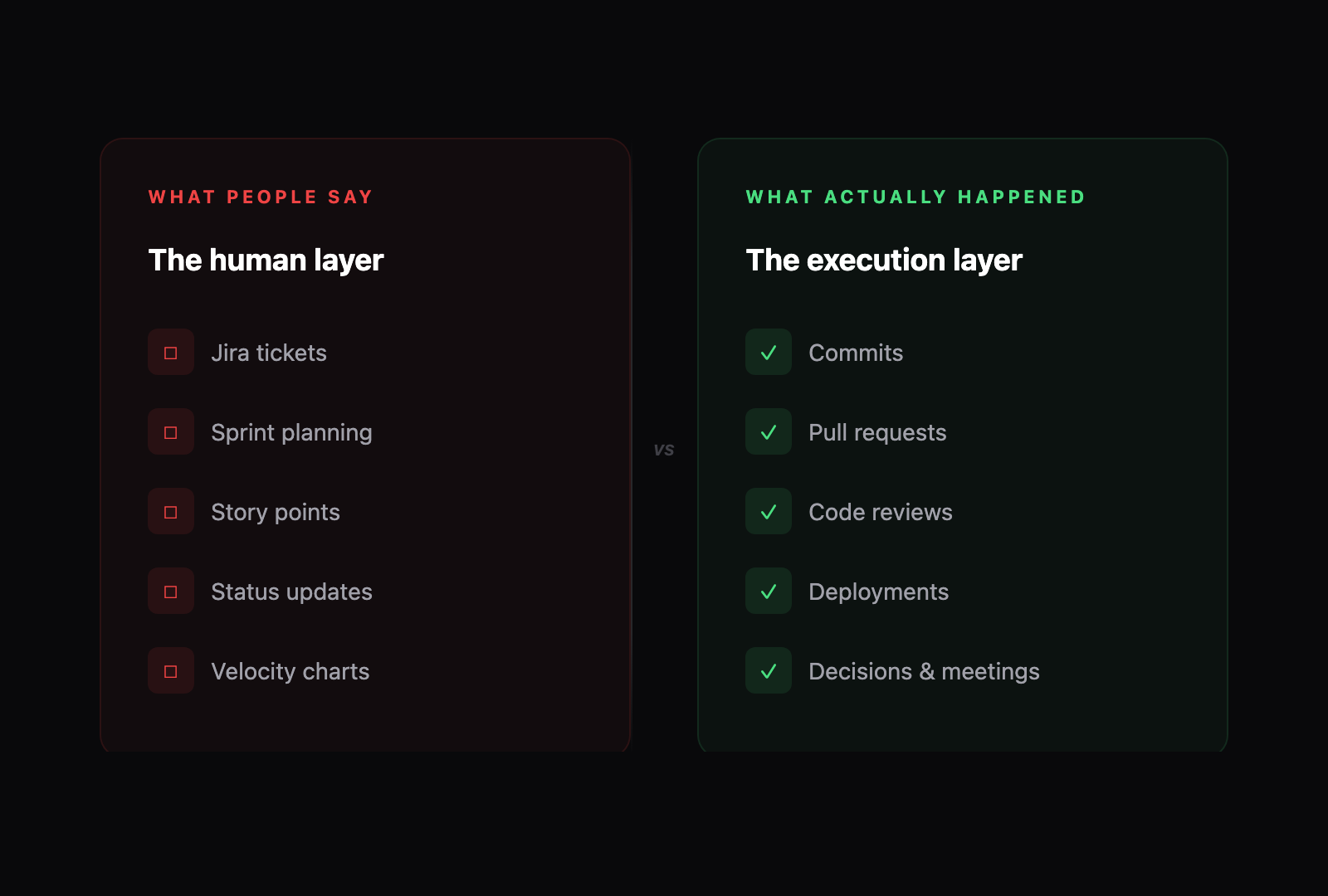
That assumption shaped everything:
- Jira tickets
- Sprint planning
- Story points
- Status updates
- Velocity charts
All of it exists to answer a simple question:
What is the team working on?
But there’s a problem.
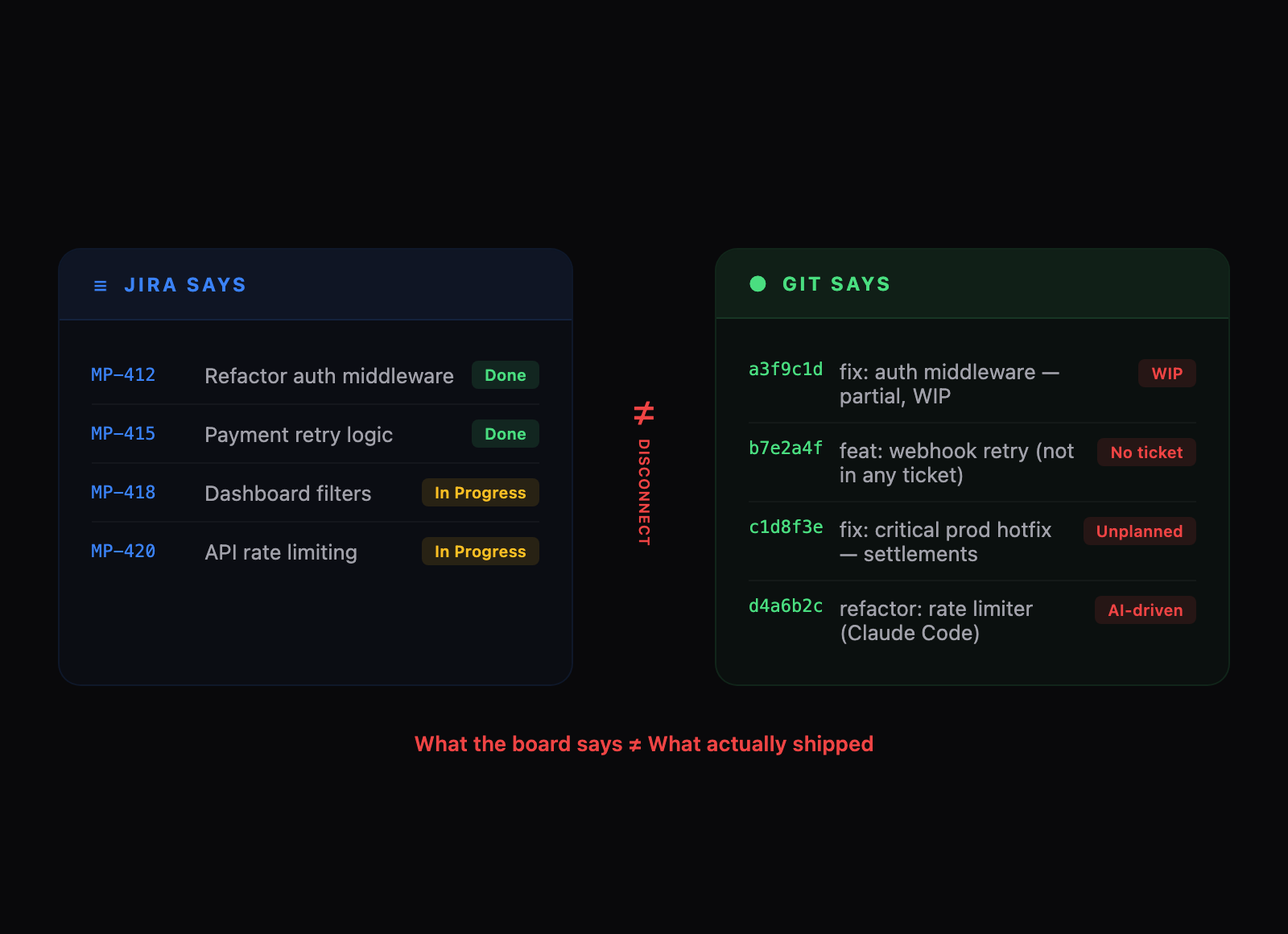
Most of that data is manually created, delayed, and often wrong.
And now we’re entering a world where that assumption no longer holds.
The Fundamental Shift
AI doesn’t rely on what people say they’re doing.
It operates on what actually happened.
- Commits
- Pull requests
- Code changes
- Reviews
- Deployments
- Meetings, decisions, and action items
This is the real execution layer of an engineering organization.
And for the first time, we can observe it directly.
No translation layer. No manual updates. No “keeping Jira in sync.”
Jira Was Built for a Different Era
Jira made sense when:
- Work had to be coordinated manually
- Managers needed visibility into distributed teams
- Code was harder to analyze at scale
So we created a system where engineers:
- Do the work
- Then document the work
- Then explain the work
Three layers of effort just to maintain visibility.
That model is breaking.
The Cracks Are Already Showing
If you’re building with AI — not just talking about it — you’ve seen it:
- Tickets that don’t reflect what actually shipped
- Work happening outside the sprint
- Sprints planned directly in the repo using Claude Code/Codex with Markdown (.md) files
- Engineers updating Jira after the fact or not at all
- Velocity becoming a vanity metric
And now add AI into the mix:
- AI writes code
- AI reviews code
- AI accelerates delivery
- AI plans and refines sprints directly in the repo
But Jira still expects a human to manually explain everything.
That gap is growing fast.
What Replaces It?
The next generation of systems won’t ask:
“What ticket is this tied to?”
They’ll answer:
- What actually shipped?
- Who contributed?
- What did it cost?
- Which initiatives moved forward?
- Where are the risks?
Automatically.
Because the data already exists.
It’s just never been connected.
The Rise of Execution Intelligence
What’s emerging is a new category:
Execution Intelligence
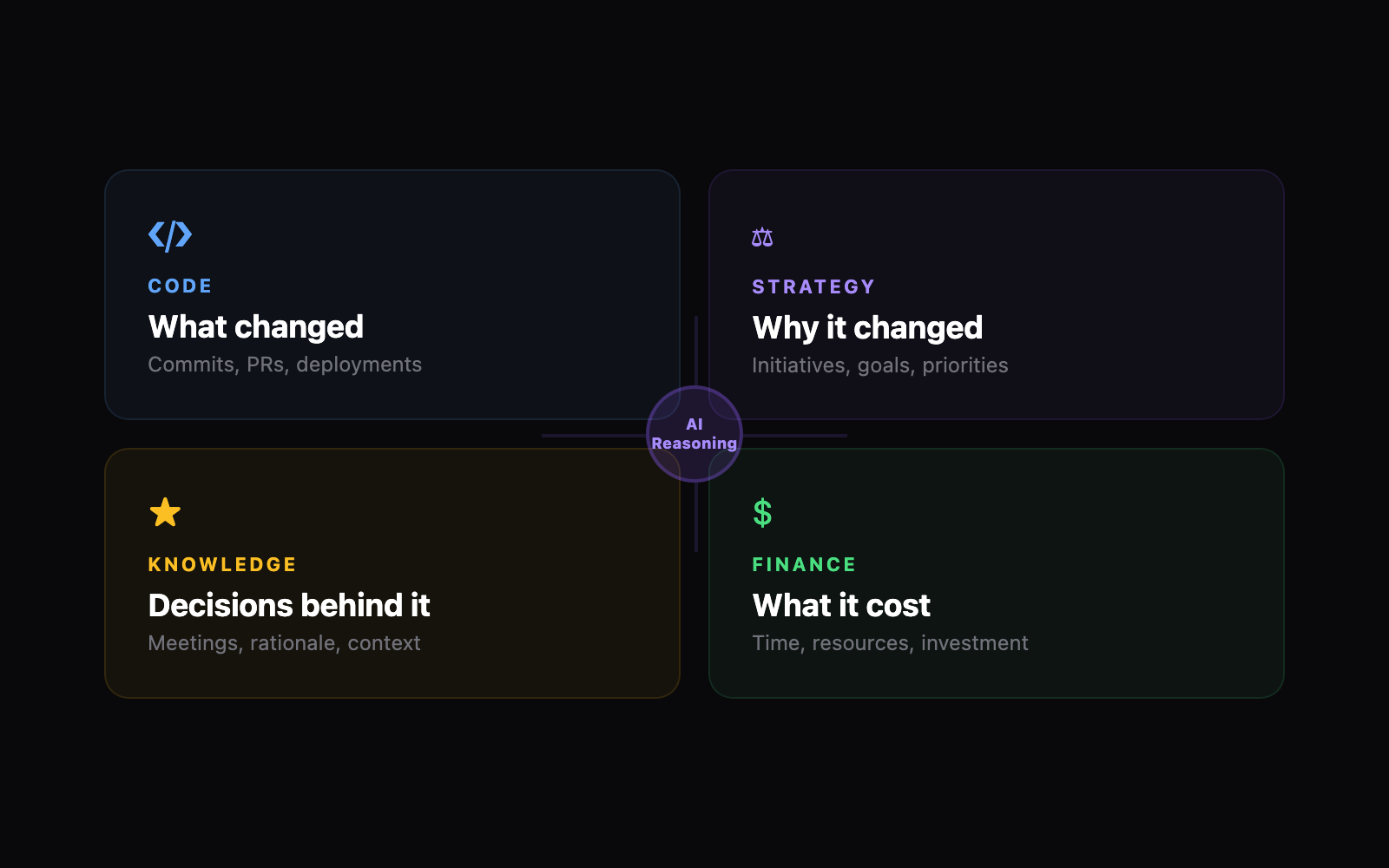
A system that connects:
- Code → what changed
- Strategy → why it changed
- Knowledge → decisions behind it
- Finance → what it cost
And allows AI to reason across all of it.
Not dashboards. Not exports. Not manually curated metrics.
But answers backed by evidence.
How Execution Intelligence Actually Works
At this point, the obvious question becomes:
If not Jira… then how does work actually get planned and executed?
In AI-first teams, the model is already shifting.
- Meetings are captured and turned into structured knowledge
- Decisions and intent are extracted automatically
- That knowledge is pushed directly into a central repository
- Sprints are defined in Markdown (.md) files alongside the work
- Claude Code / Codex operate directly on that context
In teams I work with, I set this up as a separate repository.
Not as “docs” or a “playbook” — but as the actual product execution layer.
Naming usually follows company-based patterns — company-context, company-knowledge, company-execution, or company-system — because this repo becomes the execution layer itself.
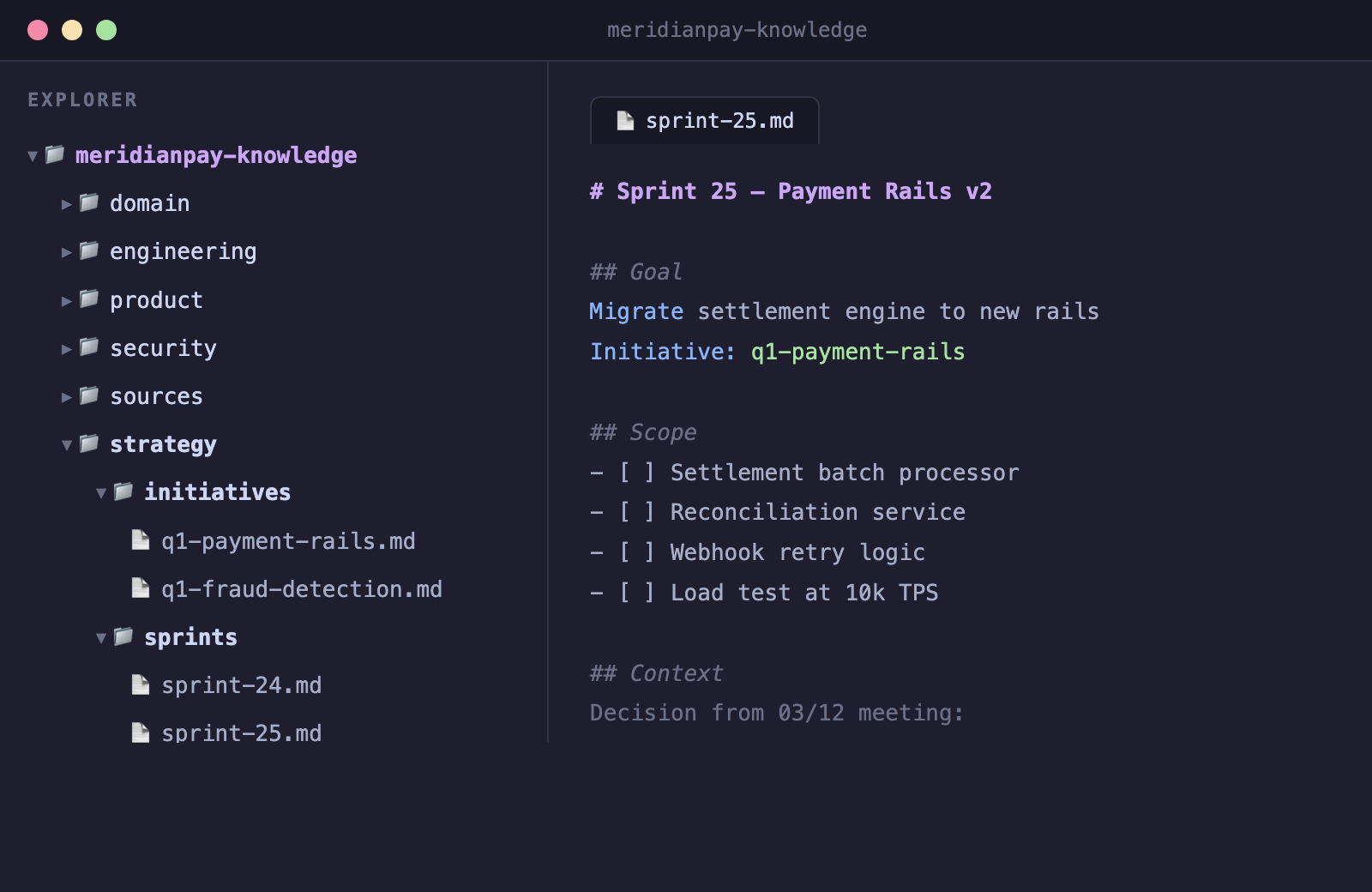
A single system where strategy, product, and execution converge.
It’s no longer just where code lives.
It’s where the product is defined, built, and evolved.
Everything flows through it:
- initiatives — strategy
- sprint definitions — strategy
- features — product (architecture per feature and planning + executing features)
- decisions from meetings — sources
- architecture direction — engineering + per feature slice
Now the repo isn’t just a codebase.
It becomes:
- the plan
- the sprint
- the execution layer
All in one place.
Where InteliG Comes In
This is where InteliG changes the game.
Because once planning and execution live in the same system, you can finally reason on top of it.
InteliG connects:
- meetings → structured knowledge
- knowledge → initiatives
- initiatives → commits and PRs
- sprints → actual execution
Now a sprint isn’t just what was planned.
It becomes a fully connected system of truth.
From Sprint → What Actually Happened
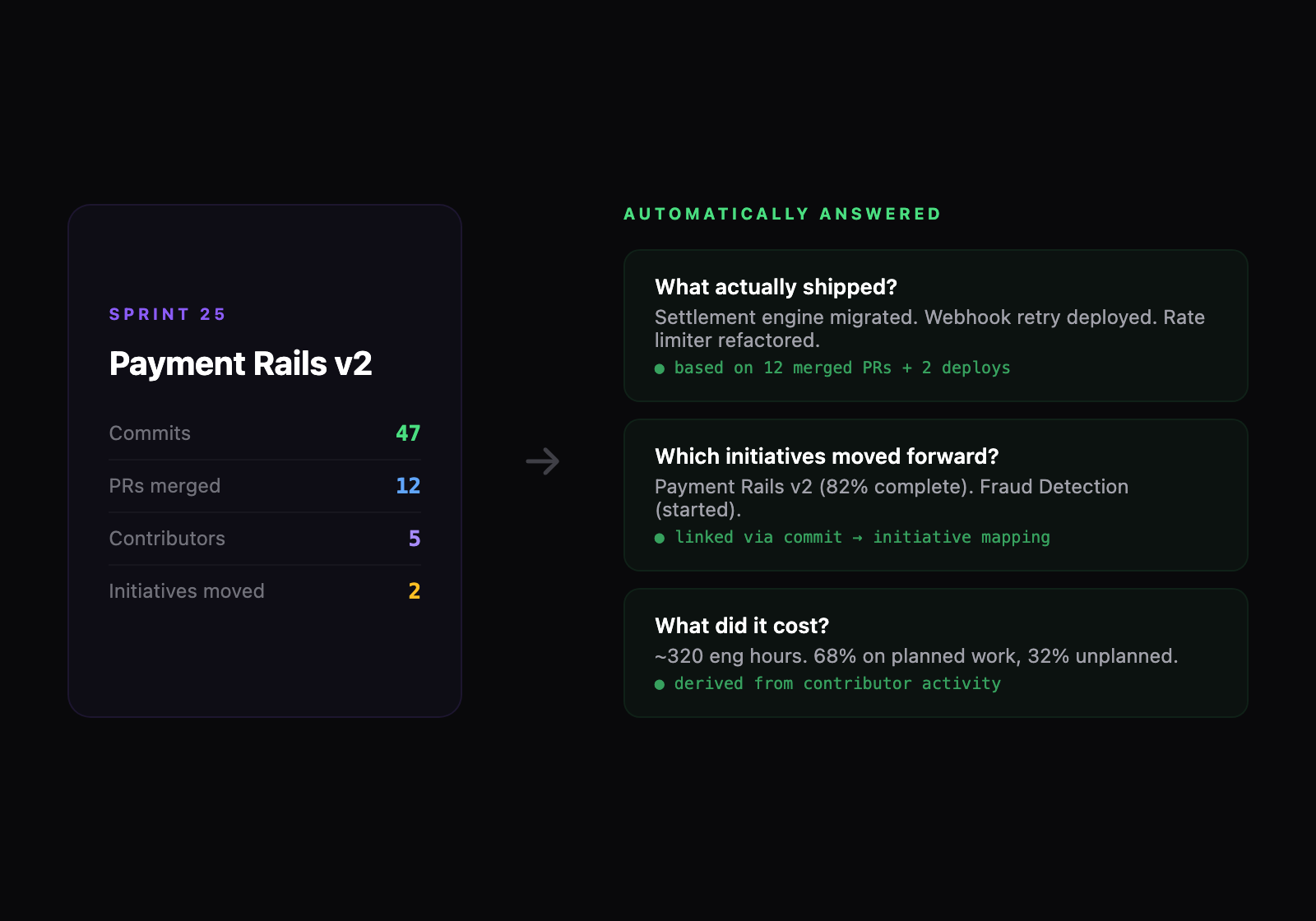
Because InteliG sits on top of this execution layer, it can answer what no tool could before:
- What actually shipped this sprint?
- Which initiatives moved forward?
- Who drove the work?
- What changed in the system?
- What did it cost?
Not based on tickets.
But based on:
- commits
- pull requests
- deployments
- and their relationship to the sprint and initiatives
InteliG doesn’t just track work.
It explains:
what was planned, what actually happened, and what it means.
Automatically.
This Is Why I Built InteliG
I didn’t start with the idea of replacing Jira.
I started with the realization that:
Jira was never telling the truth.
It was telling a version of reality — filtered through tickets, updates, and human interpretation.
Meanwhile, the real signal was sitting in:
- the code
- the commits
- the decisions
- the actual execution
So I built InteliG to operate on that layer instead.
No tickets. No manual tracking. No “keeping things in sync.”
Just a system that understands what actually happened.
When planning, execution, and intelligence all live in the same system… there’s nothing left for Jira to do.
I didn’t build it to kill Jira.
But it does.
Jira Doesn’t Disappear — It Becomes Irrelevant
Jira won’t vanish overnight — but for AI-first orgs, it already has.
Its role becomes:
- a coordination tool
- a UI for process
- a legacy layer for planning
Not the source of truth.
Because the source of truth is now observable directly.
The Bottom Line
We’re moving from:
Planned Work → Tracked Work → Reported Work
To:
Actual Work → Observed → Understood
That shift is massive.
And it changes how engineering organizations are run.
The teams that adopt this early will:
- move faster
- operate with clarity
- make better decisions
The ones that don’t will keep managing abstractions.
Final Thought
AI doesn’t need tickets.
It needs truth.
And the companies that build around that idea will define the next decade of software.
This is what I’m building at InteliG — execution intelligence for engineering teams. If you’re a CTO or VP Engineering running an AI-first org, check it out.
See What Your Engineering Org Is Really Doing
InteliG reads your repos, analyzes every commit, and gives you the execution intelligence CTOs actually need.
Start Your Trial